Why Direct Ticketing Wins: Keep Your Revenue and Customer Data
Last updated: April 2026. This article is for informational purposes only. Statistics and third-party features referenced may have changed since publication. Terms apply.
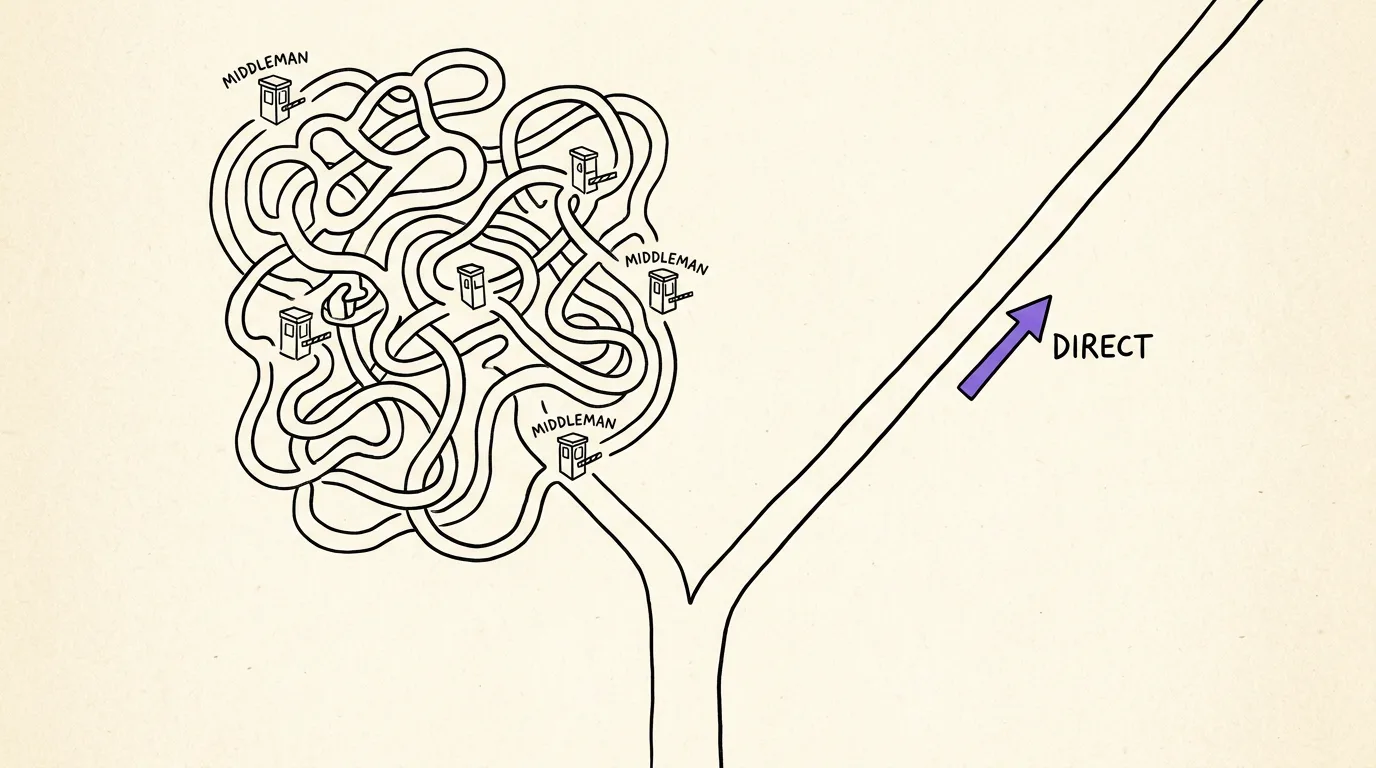
Every year, event organizers hand over tens of thousands of dollars to ticketing middlemen -- and most never stop to question why. Platforms like Eventbrite charge per-ticket fees that feel small in isolation but add up to staggering sums at scale. Worse, they sit between you and your attendees, controlling the customer relationship, the data, and the payout timeline.
There is a better model: selling tickets directly through your own payment processor. You keep the revenue, you own the customer data from day one, and you eliminate the middleman markup entirely. This article breaks down exactly why direct ticketing wins and what it means for your bottom line.
The True Cost of Ticketing Middlemen
Most organizers focus on the percentage fee when evaluating a ticketing platform. But the real cost is a combination of several charges that compound on every single transaction.
Typical middleman fee structure
A platform like Eventbrite charges a service fee (typically around 3.7% of the ticket price) plus a per-ticket fee (often $1.79 per ticket), on top of payment processing fees (around 2.9% + $0.30). Some platforms absorb the processing fee into their own markup, but the net effect is the same: you lose a significant chunk of every sale.
For a $50 ticket, these fees typically total around $3.64 per ticket. That might seem manageable for a small event, but the math changes dramatically at scale.
The Math: What You Save on 10,000 Tickets
Let us run the numbers on a real scenario: a convention selling 10,000 tickets at $50 each.
With a ticketing middleman
- Gross revenue: $500,000
- Platform service fee (3.7%): -$18,500
- Per-ticket fee ($1.79 x 10,000): -$17,900
- Total fees to middleman: -$36,400
- Net to you: $463,600
That is $36,400 gone -- money that could fund an additional headliner, upgrade your AV setup, or go straight to your bottom line.
With direct ticketing through Confanum
- Gross revenue: $500,000
- Payment processing (Stripe/Square, ~2.9% + $0.30): -$17,500
- Confanum platform fee: $0 (included in your subscription)
- Net to you: $482,500
You still pay standard payment processing fees -- those are unavoidable with any card transaction. But the $36,400 middleman markup disappears entirely. Over a few years of running annual events, that is six figures back in your pocket.
Beyond the Fees: Why Data Ownership Matters
The financial savings are compelling, but the strategic advantages of direct ticketing go further.
You own the customer relationship
When attendees buy through a middleman, the platform owns the transaction. They can (and do) market to your attendees -- promoting competing events, sending their own newsletters, and building their brand on the back of your audience. When you sell directly, every buyer goes into your database, your CRM, and your email list. You control the relationship from the first purchase to the post-event follow-up.
Instant access to revenue
Middleman platforms often hold your funds for days or weeks after the event. Some have complex payout schedules that leave you waiting while vendor deposits and venue payments come due. With your own Stripe or Square account, funds settle directly to your bank on the standard processing timeline -- typically 2 business days. No intermediary holding your money.
Complete attendee analytics
Middleman platforms give you some data, but it is filtered through their dashboard and their export tools. With direct ticketing, you have full access to purchase history, ticket types, promo code usage, geographic data, and purchase timing. This data is invaluable for marketing next year's event, setting pricing strategy, and understanding your audience.
No platform lock-in
When your ticket sales run through a third-party platform, switching providers means losing your sales history, breaking existing ticket links, and potentially confusing attendees. With direct ticketing through your own payment processor, you own the infrastructure. If you ever change event management platforms, your Stripe or Square account -- and all its history -- stays with you.
How Confanum's Direct Ticketing Model Works
Confanum does not process payments on your behalf. Instead, you connect your own Stripe, Square, or PayPal account directly to the platform. Here is what that means in practice:
- You create your payment account. Sign up for Stripe, Square, or PayPal Business if you do not already have one. You control the account, the bank connection, and the settings.
- You connect it to Confanum. In the admin dashboard, you enter your API credentials. Confanum uses these to process charges directly through your account.
- Attendees buy tickets on your site. The checkout experience is branded to your event. Buyers see your name on their credit card statement, not a third party's.
- Funds go to your bank. Payments settle to your bank account on the standard Stripe/Square timeline. Confanum never touches the money.
This model gives you the full-featured ticketing experience -- promo codes, reserved seating, sale pricing, order management, walk-up sales, refunds -- without the middleman markup.
What About the Middleman's "Reach"?
The most common argument for using a platform like Eventbrite is discoverability: "They have a marketplace where people browse for events." But for most conventions and fan events, this marketplace traffic is negligible. Your attendees find you through your marketing, social media, guest announcements, and word of mouth -- not by browsing a ticketing platform's event directory.
If your event depends on a ticketing platform's marketplace to sell tickets, you have a marketing problem, not a ticketing problem. And you are paying a steep premium for a solution that does not address the root issue.
The Convenience Argument
Some organizers stick with middlemen because setup is easy: create an account, list your event, start selling. But modern direct-ticketing platforms like Confanum are just as easy to set up. You can have tickets on sale within an hour of creating your event. The "convenience tax" of thousands of dollars per event is not justified by a marginally simpler setup process.
Making the Switch
If you are currently using a ticketing middleman, switching to direct ticketing is straightforward:
- Set up your payment processor account (Stripe, Square, or PayPal Business). This takes 10-15 minutes.
- Connect it to your Confanum dashboard. Enter your API keys in the payment settings.
- Recreate your ticket types. Set up general admission, VIP, multi-day passes, and any add-ons.
- Update your ticket links. Point your website and social media to your new ticket page.
- Import your attendee data. If you have existing buyers from a previous platform, import their data via CSV so you have a complete record.
For most organizers, the entire migration takes less than a day. The savings start with the very first ticket sold.
The Bottom Line
Direct ticketing is not about being cheap. It is about keeping the money you earned, owning your customer relationships, and maintaining control over your event's financial infrastructure. For a 10,000-ticket event at $50 each, that means saving $36,400 -- every single year.
Your attendees do not care which platform processed their ticket. They care about a smooth purchase experience and a great event. Direct ticketing gives them both while keeping significantly more revenue in your pocket.
Ready to keep more of your ticket revenue?
Confanum lets you connect your own Stripe, Square, or PayPal account and sell tickets directly -- no middleman fees, no payout delays, no data lock-in.
Schedule a DemoEvent Ticketing and Payments: A Complete Setup Guide
Choose between Stripe, Square, and PayPal. Configure ticket types, promo codes, reserved seating, and walk-up sales.
How to Migrate from Eventbrite to Confanum
A step-by-step guide to switching from Eventbrite to direct ticketing with Confanum.
Reserved Seating for Events: A Complete Setup Guide
When to use reserved seating, how to set it up, and common mistakes to avoid.